Sentinel Node Biopsy
Sentinel node biopsy is the gold standard axillary staging method for breast cancer surgery.
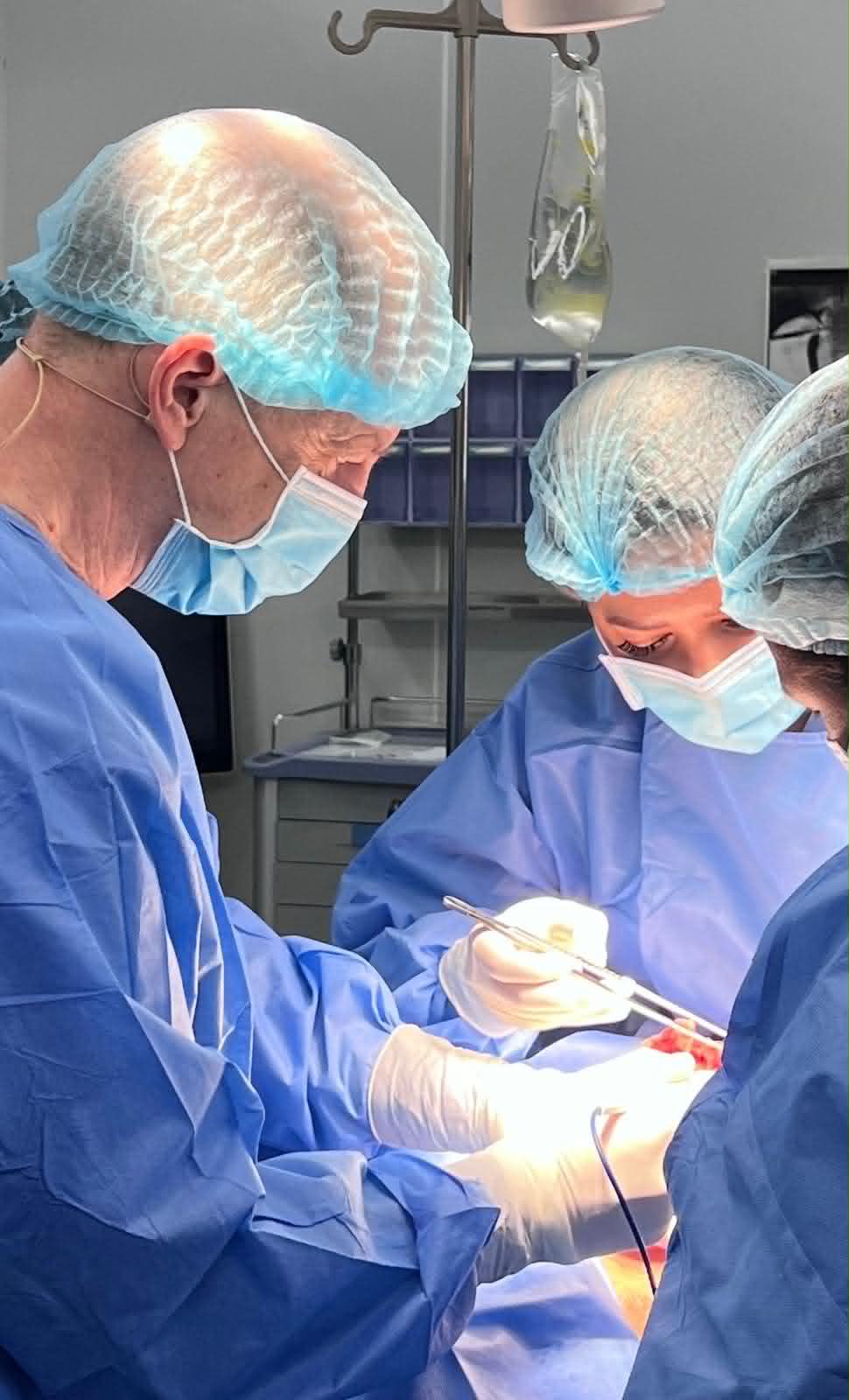
I have a particular interest in this technique, which is the gold standard axillary, or armpit, staging method for breast cancer surgery. I introduced the operation to Buckinghamshire and have presented important sentinel node research internationally. I was approved as a trainer in the technique by the Royal College of Surgeons of England.
I introduced the intra-operative analysis of sentinel nodes using molecular techniques, known as OSNA. This means that the surgeon knows whether the node is positive or negative during surgery. I have presented work on OSNA in the UK, Europe and America.
For invasive breast cancer, most women are offered breast conservation surgery with sentinel node biopsy, providing they do not have clinically abnormal lymph glands. Instead of removing most of the armpit lymph glands, only one or two glands are normally removed. This means that the patient has far fewer potential side-effects from surgery and typically goes home the same day. It requires a special scan before the operation and an injection of blue dye during the operation.
Mastectomy
When mastectomy is necessary, reconstruction will be discussed where appropriate.
If a mastectomy is deemed necessary, breast reconstruction will be offered if it is appropriate. The patient will undergo removal of the breast and usually some lymph nodes under the armpit. Wound drains are sometimes required.
A local anaesthetic block is given during the operation to reduce postoperative pain. Most ladies go home as a day case, thanks to the modern approaches used.
Breast Reconstruction
Immediate reconstruction is offered where possible.
If possible, immediate breast reconstruction is offered. I will often carry out a skin-sparing mastectomy, whereby most of the breast skin is preserved to produce a good cosmetic outcome.
All types of reconstruction are available, from implants (with or without ADMs - acellular dermal matrices) to free flap procedures. Mr Cunnick carries out implant work himself. However, free flap procedures are carried out jointly with Mr Cunnick and an experienced microvascular plastic surgeon. Patients requiring reconstruction usually stay either one night (if implant) or up to 4 nights (if free flaps). These options are discussed in detail in the clinic.
Benign Breast Lumps
Some benign breast lumps require removal.
Sometimes benign breast lumps require removal. Most operations are performed as day cases via cosmetic incisions.
Magseed-guided excisions.
Some breast abnormalities, benign and cancerous, cannot be felt by the patient or the surgeon. These are often those lesions that are detected by breast screening mammograms. If they require removal, a small marker, called a 'Magseed', is inserted into the abnormality under local anaesthesia by the radiologist. At the time of surgery, Mr Cunnick can detect the Magseed using a special probe. He can then remove the area accurately and carry out an X-ray immediately in the operating theatre to check the entire lesion has been excised.
Cosmetic Surgery
Breast augmentation, reduction and revisional implant surgery.
Mr Cunnick also offers breast augmentation and breast reduction surgery. He also has experience in revisional surgery for those patients with implant-related problems, such as capsule formation and silicone leaks.
Sutures
Dissolvable stitches are used routinely.
Dissolvable stitches are used routinely in each patient, which avoids the need for subsequent stitch removal. Many surgeons believe that it also leaves a tidier, cosmetic scar.
Inpatient Care
Overnight care is supported by ward nurses and breast care nurses.
Patients requiring admission overnight will be looked after by dedicated ward nurses and Breast Care Nurses. Mr. Cunnick regularly reviews patients post-operatively. An outpatient appointment will be made prior to discharge.